
Non-Recourse Loans
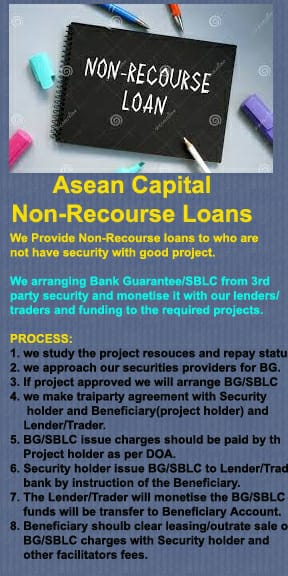
Nonrecourse debt or a nonrecourse loan (sometimes hyphenated as non-recourse) is a secured loan (debt) that is secured by a pledge of collateral, typically real property, but for which the borrower is not personally liable. If the borrower defaults, the lender can seize and sell the collateral, but if the collateral sells for less than the debt, the lender cannot seek that deficiency balance from the borrower—its recovery is limited only to the value of the collateral. Thus, nonrecourse debt is typically limited to 50% or 60% loan-to-value ratios,[1] so that the property itself provides “overcollateralization” of the loan.
Recourse vs. Non-Recourse Loans: An Overview
A recourse loan allows a lender to pursue additional assets when a borrower defaults on a loan if the debt’s balance surpasses the collateral’s value. A non-recourse loan permits the lender to seize only the collateral specified in the loan agreement, even if its value does not cover the entire debt.
Either type of loan may be collateralized. That is, the loan agreement will specify that the lender can seize and sell specific property or properties of the borrower to recoup losses in case the loan defaults. However, a recourse debt gives the lender the recourse to pursue additional assets of the borrower beyond the value of the collateral if it is necessary to recoup its losses on the loan.
KEY TAKEAWAYS
- There are two types of loans: recourse and non-recourse.
- Both recourse and non-recourse loans allow lenders to seize collateralized assets after a borrower fails to repay a loan.
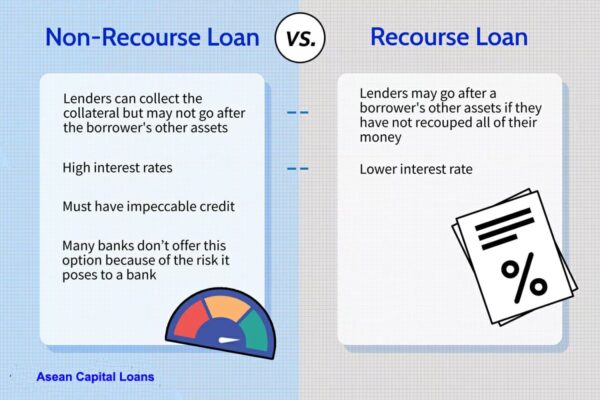
- After collateral is collected, lenders of recourse loans may go after a borrower’s other assets if they have not recouped all of their money.
- Lenders can collect the collateral from a non-recourse loan but cannot go after the borrower’s other assets by law.
- Non-recourse loans may have stricter terms, higher rates, and other conditions recourse loans will not have.
Recourse Loans
Recourse loans have a lower interest rate than non-recourse loans.2 If the borrower fails to live up to their obligation and default on the payment schedule, the lender will first seize and sell the collateral specified in the loan. If that is not of sufficient value to repay the loan amount, the lender can go after the borrower’s other assets or sue to have the borrower’s wages garnished.1
From the lender’s point of view, a recourse loan reduces the potential risk associated with less creditworthy borrowers. Because lenders can reduce the risk associated with these loans, they can charge a lower interest rate. This makes them more attractive to borrowers.3
If you abandon collateral offered for a recourse loan, you’ll need to claim a capital gain or loss when foreclosure completes.4
These loans are most common when banks and other financial institutions tighten their lending practices. For example, when the economy is going through rocky times, the credit markets get more conservative, and lenders raise their standards.
Non-Recourse Loans
Many banks do not offer non-recourse loans. It leaves them vulnerable to losses if their customers default on their loans and their collateral proves insufficient. If there’s a balance due after selling the asset collateralized with the loan, the lender has to take the loss. It has no claim on the borrower’s other funds, possessions, or income.
While potential borrowers may find it attractive to hold out for non-recourse loans, they usually come with higher interest rates.2 They are also generally reserved for individuals and businesses with stellar credit histories. A non-recourse loan is not a get-out-of-a-loan-free card; failure to pay off a non-recourse debt has penalties, including loss of the collateral, damage to the borrower’s credit score, and possible taxes.
Contact us
Our Location
Address: 8-2-293/K/7, Kamalapuri Colony, Road No 3B, Banjara Hills, Hyderabad – 500034
Email: capitalasean@gmail.com / info@aseancapital.in
Contact: +91 8692 831 278
Working Hours: